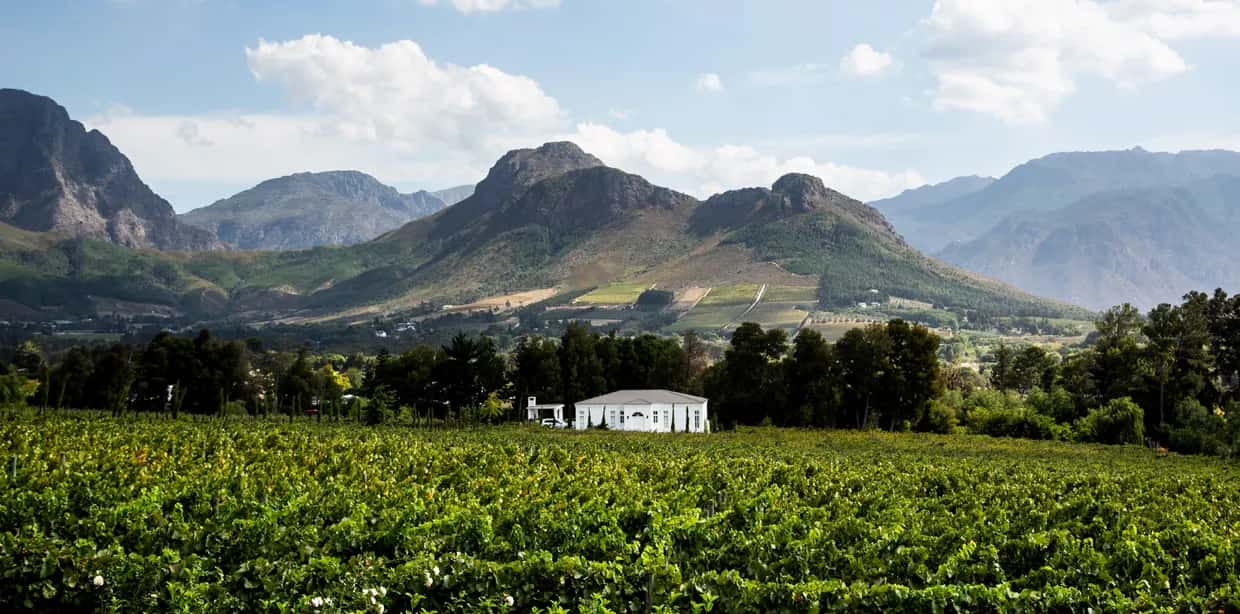
A guide to wine tasting in South Africa
Wine tasting in South Africa's main wine regions: what a tasting is like, the regions and the estates to know, the grapes, what it costs, when to go and how to plan the day.
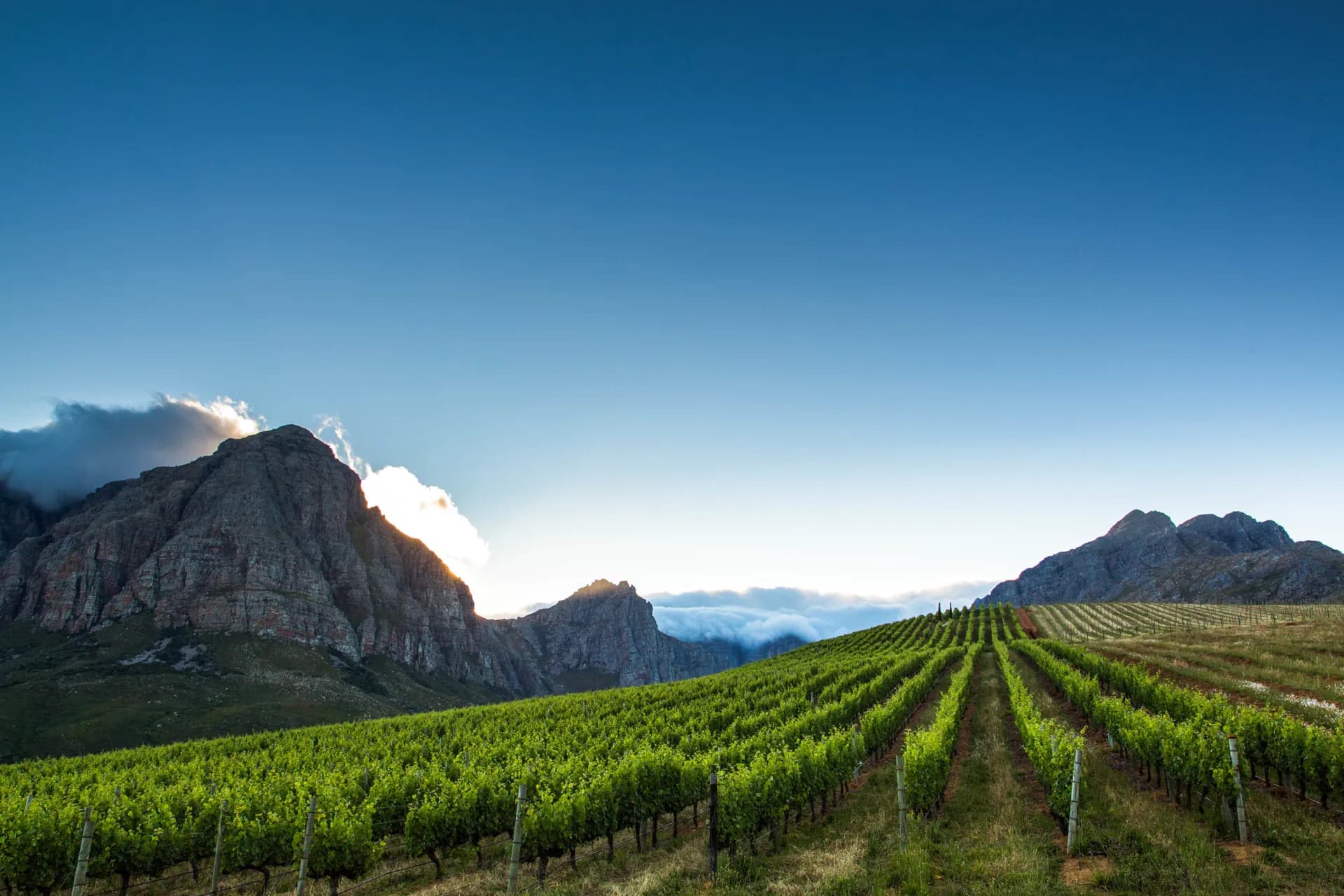
Wine tasting in South Africa happens at the cellar door, on the farm where the wine is made, usually with a view of the vineyards and the mountains behind them. Most of it is in the Western Cape, within two hours of Cape Town, and a standard tasting costs about R100.
This guide covers what a tasting is like, the regions and some estates to know in each, the grapes you'll taste, what it costs, when to go and how to plan the day. Prices come from Winetrip's tasting price index, checked against the estates' own websites in October 2026, and the awards from the guides and critics that gave them.
What a tasting is like
Five or six wines, at your pace
A standard tasting is a set of the estate's current wines, poured in small measures at the counter or at a table, with someone to talk you through them. Many estates let you choose your wines from a list. A tasting takes about an hour, and nobody hurries you.
Walk in, or book
Most estates take walk-ins. Some ask you to book, especially at weekends and for groups, and a few open by appointment only. Each estate's page on Winetrip says which.
More than the standard tasting
Most estates also offer a premium or reserve tasting of their flagship wines, and many offer pairings: wine with chocolate, cheese, biltong, nougat or small plates. Some have cellar tours, vineyard walks or a restaurant.
Say what you taste
There are no wrong answers in a tasting room. "This one reminds me of blackberries" is as useful as any tasting note, and the people pouring are glad to talk about the wines.
The regions and estates to know
Stellenbosch
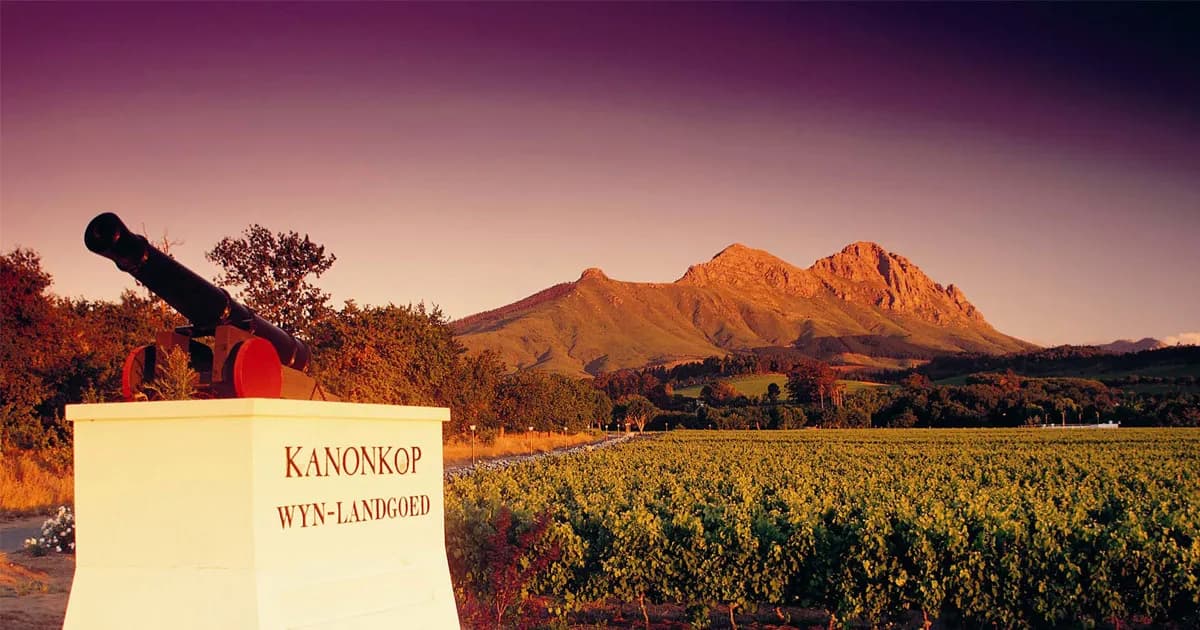
The Stellenbosch Wine Routes, founded in 1971, was South Africa's first wine route and has more than 150 members; Winetrip lists 130 estates in Stellenbosch and its wards. It's known for Cabernet Sauvignon, Bordeaux-style blends and Pinotage. A standard tasting costs about R120 (Stellenbosch's prices).
Estates to know: Kanonkop, a Pinotage producer with 13 wins in the Absa Top 10 Pinotage competition by 2018; Simonsig, whose The Garland Cabernet Sauvignon 2020 was Platter's Cabernet Sauvignon Wine of the Year in the 2025 guide; Tokara, whose winemaker Stuart Botha was Young Winemaker of the Year in Tim Atkin's 2025 South Africa report; Jordan, Meerlust and Delaire Graff.
Explore Stellenbosch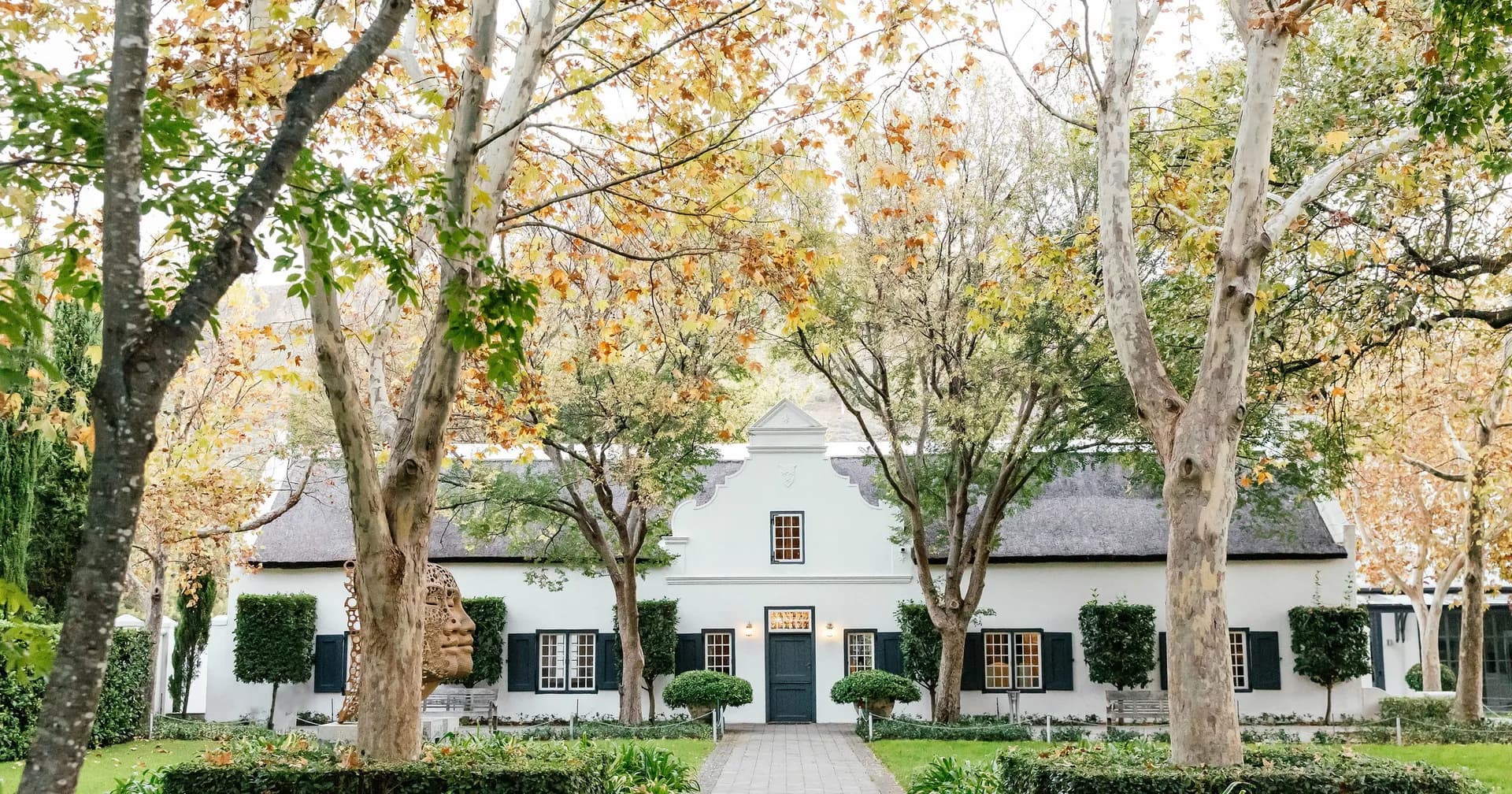
Franschhoek
A valley ringed by mountains, settled by French Huguenots in the 1680s, with restaurants as much a reason to come as the wine. The Franschhoek Wine Tram's five hop-on hop-off lines connect its estates and those of Groot Drakenstein, so you can taste without driving (how the Wine Tram works). A standard tasting costs about R145 (Franschhoek's prices).
Estates to know: Grande Provence, Boschendal, Leopard's Leap, Rickety Bridge and Boekenhoutskloof, which receives visitors by appointment.
Explore Franschhoek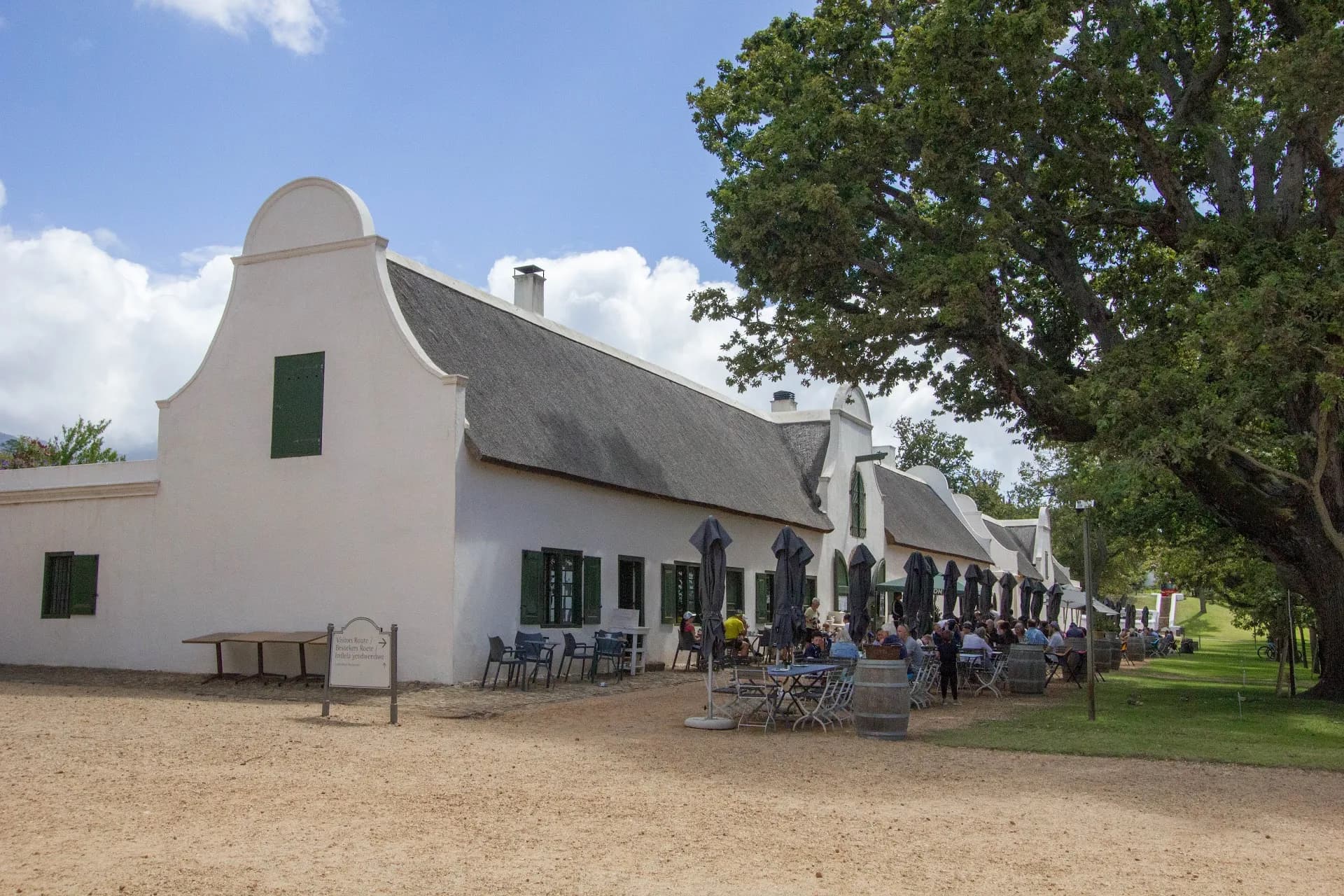
Constantia
Constantia's estates lie in Cape Town's southern suburbs, twenty minutes from the city centre. Groot Constantia, granted to Simon van der Stel in 1685, is South Africa's oldest wine estate. The valley is known for Sauvignon Blanc and for Vin de Constance, the sweet wine Klein Constantia revived. A standard tasting costs about R150, the most of any Cape valley (prices near Cape Town).
Estates to know: Klein Constantia, No. 6 in The World's 50 Best Vineyards 2025, where it was the year's Highest Climber and the best vineyard in Africa; Groot Constantia; Buitenverwachting.
Explore Constantia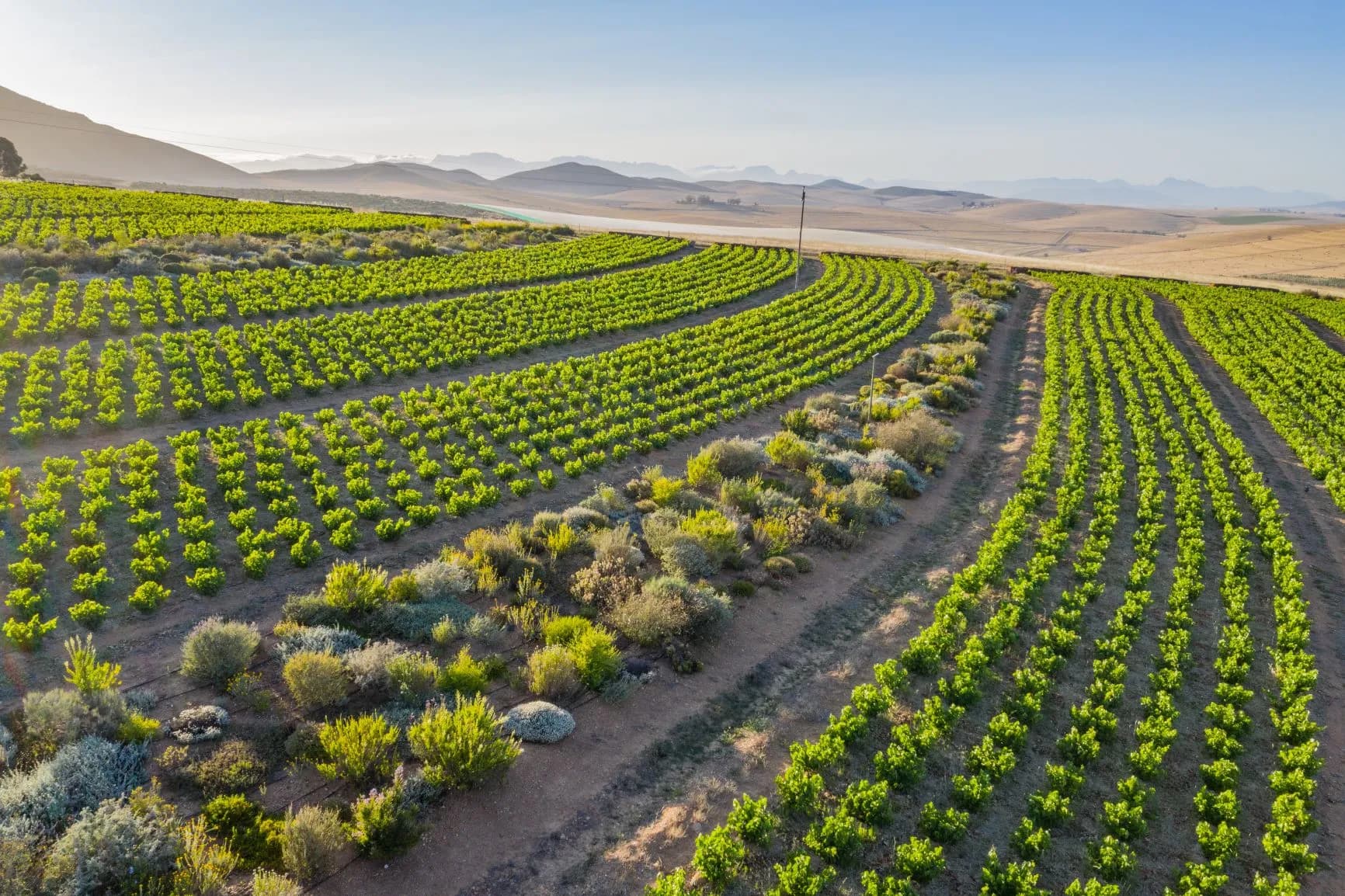
Swartland
North of Cape Town, around Malmesbury and the Riebeek valley, the Swartland's dry-farmed old vines draw winemakers working with Chenin Blanc, Syrah and Rhône-style blends. Many of its producers are small, and several open only by appointment.
Estates to know: Mullineux, five times Platter's Top Performing Winery of the Year (2014, 2016, 2019, 2020 and 2023 guides), whose Swartland winery holds a monthly tasting by booking; Porseleinberg, whose Syrah 2023 scored 100 points and was Red Wine of the Year in Tim Atkin's 2025 report.
Explore Swartland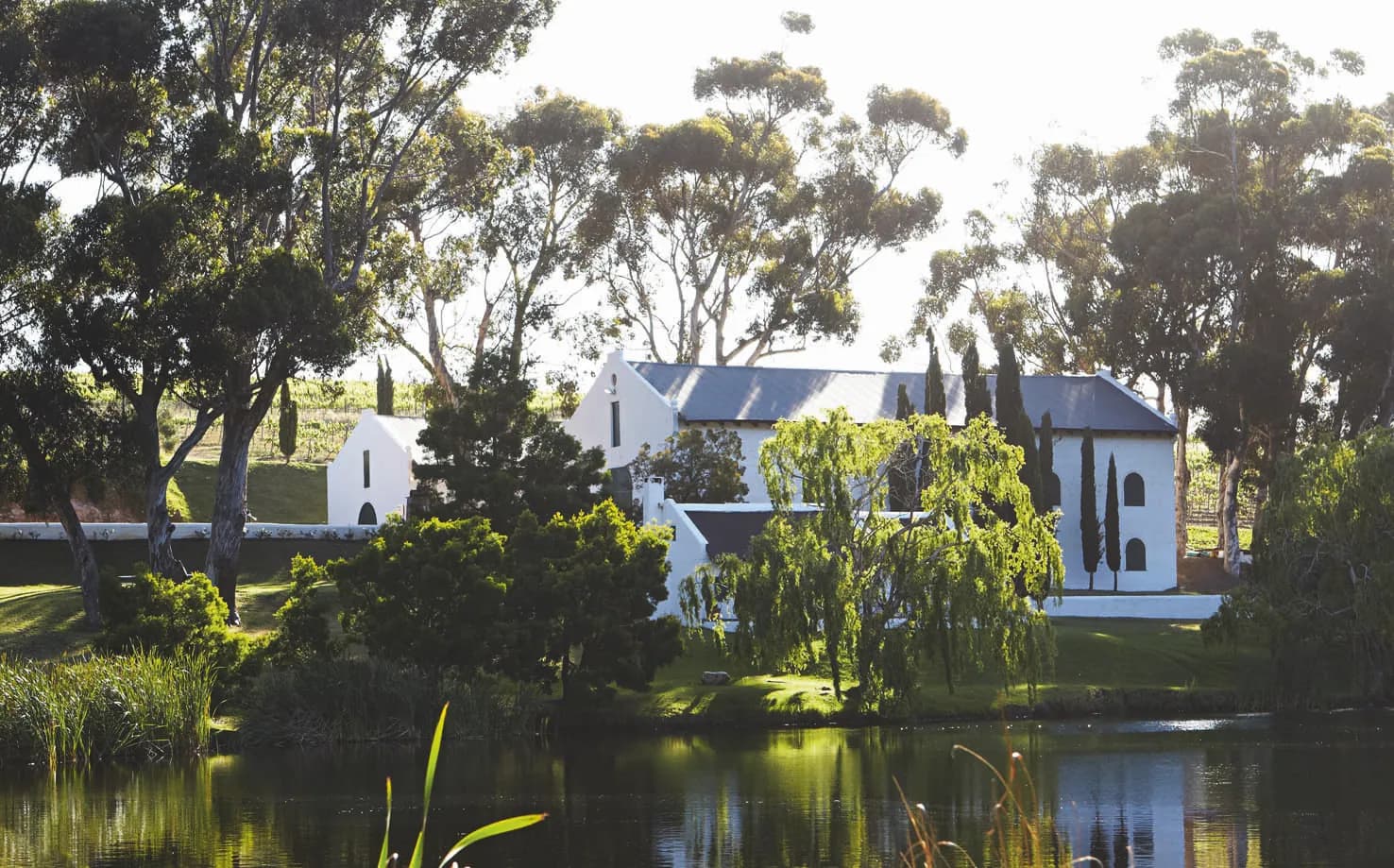
Hemel-en-Aarde
Behind the coastal town of Hermanus, the Hemel-en-Aarde ("heaven and earth") valley is cooled by the sea, and known for Pinot Noir and Chardonnay. Fewer than a third of Walker Bay's estates publish a tasting price; those that do charge about R120 (prices around Hermanus).
Estates to know: Hamilton Russell, Platter's Editor's Award Winery of the Year in the 2025 guide, its 50th anniversary year; Thamnus, whose Chardonnay 2022 won gold with 96 points at the Decanter World Wine Awards; Newton Johnson, Bouchard Finlayson and Creation.
Explore Hemel-en-Aarde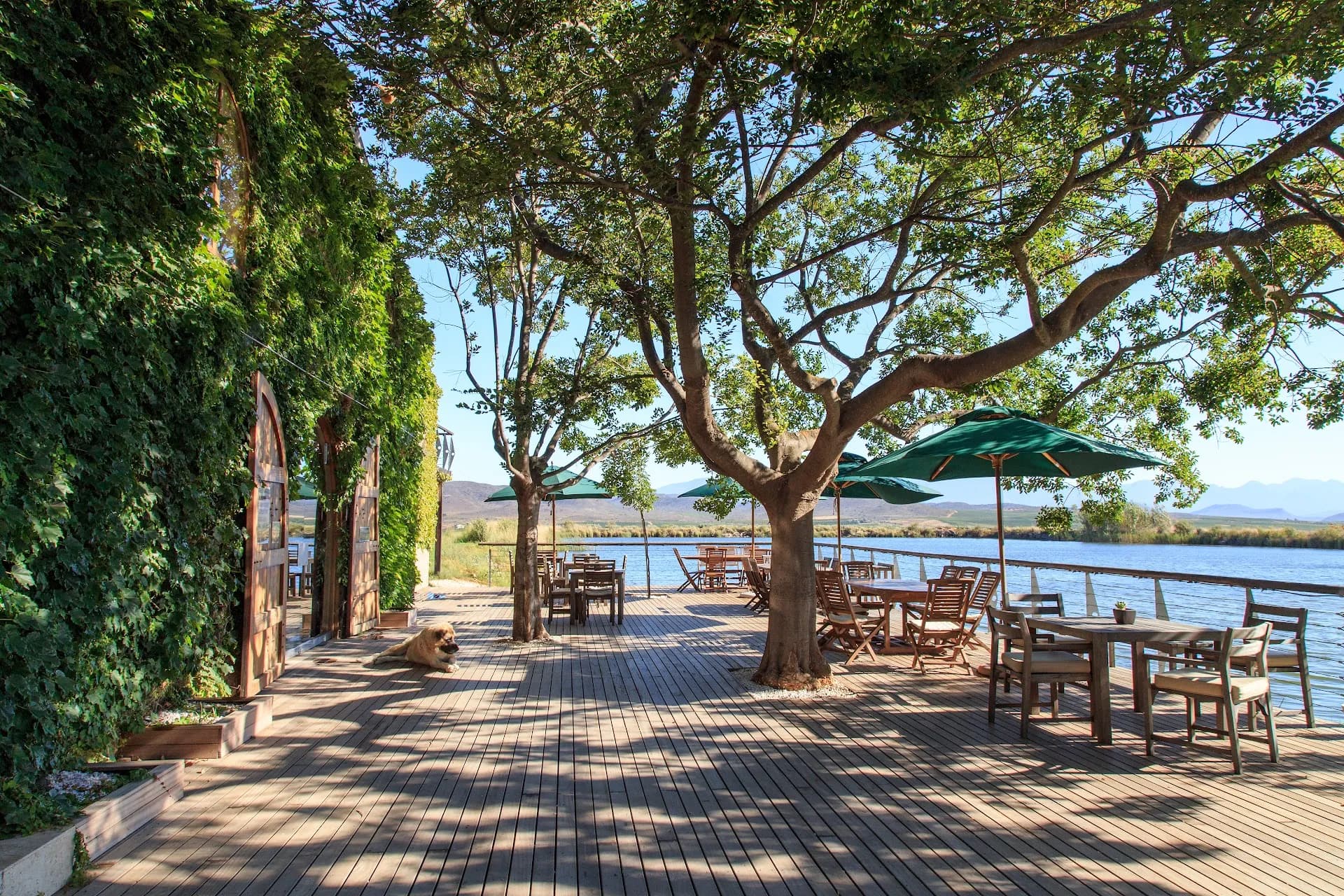
Robertson
Two hours east of Cape Town, the Robertson valley's limestone soils suit Chardonnay, and it's home to the Cap Classique house Graham Beck. Tastings here cost the least of any Cape valley: about R50.
Estates to know: Graham Beck, which earns five-star ratings in Platter's guide year after year, three of them in the 2026 guide; De Wetshof, known for Chardonnay; Springfield; Bon Courage.
Explore Robertson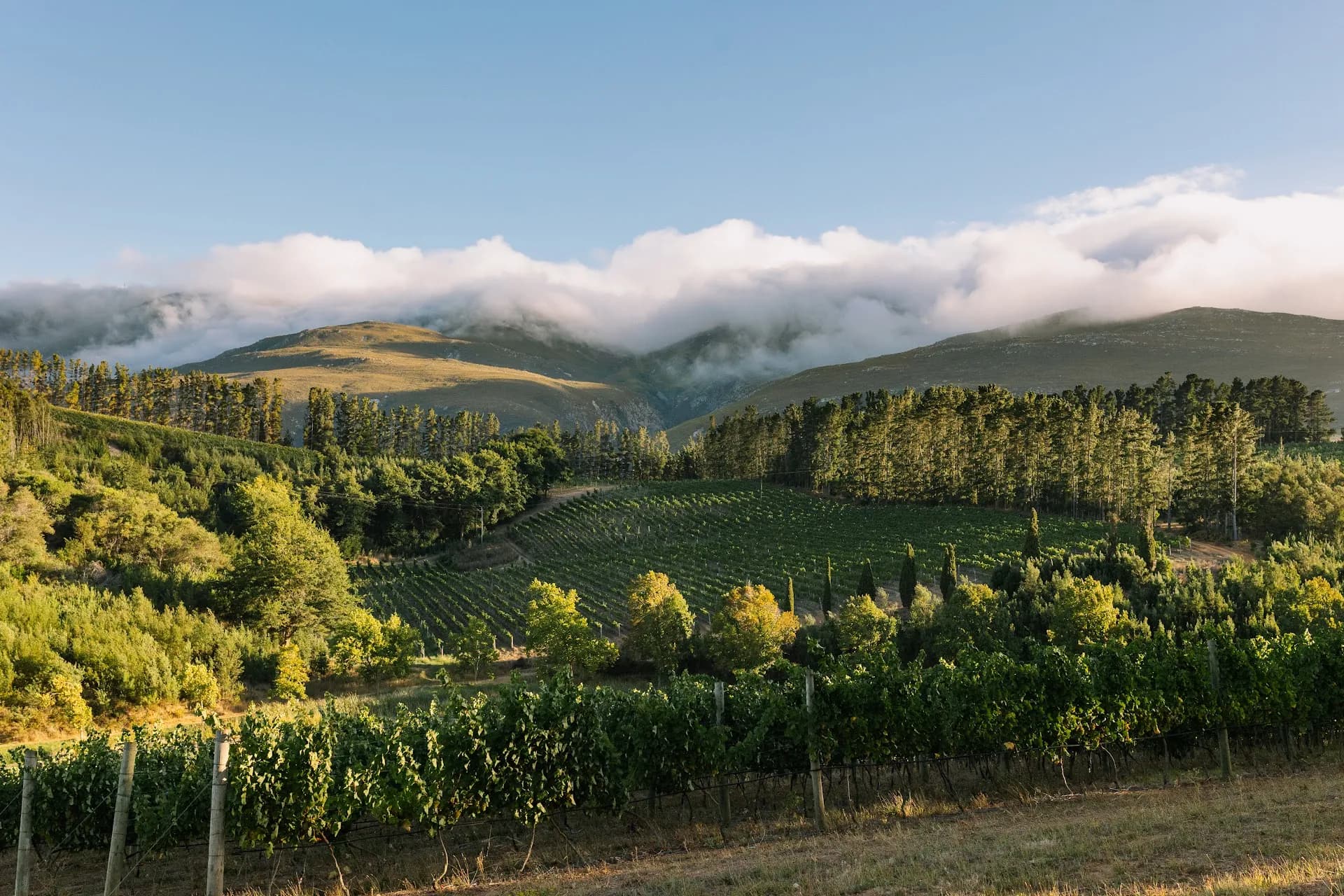
Elgin
An hour from Cape Town over Sir Lowry's Pass, Elgin is apple and pear country, and its high, cool vineyards produce Chardonnay, Pinot Noir and Sauvignon Blanc.
Estates to know: Iona, whose Elgin Highlands Chardonnay 2022 was Platter's Chardonnay Wine of the Year in the 2025 guide; Paul Cluver.
Explore Elgin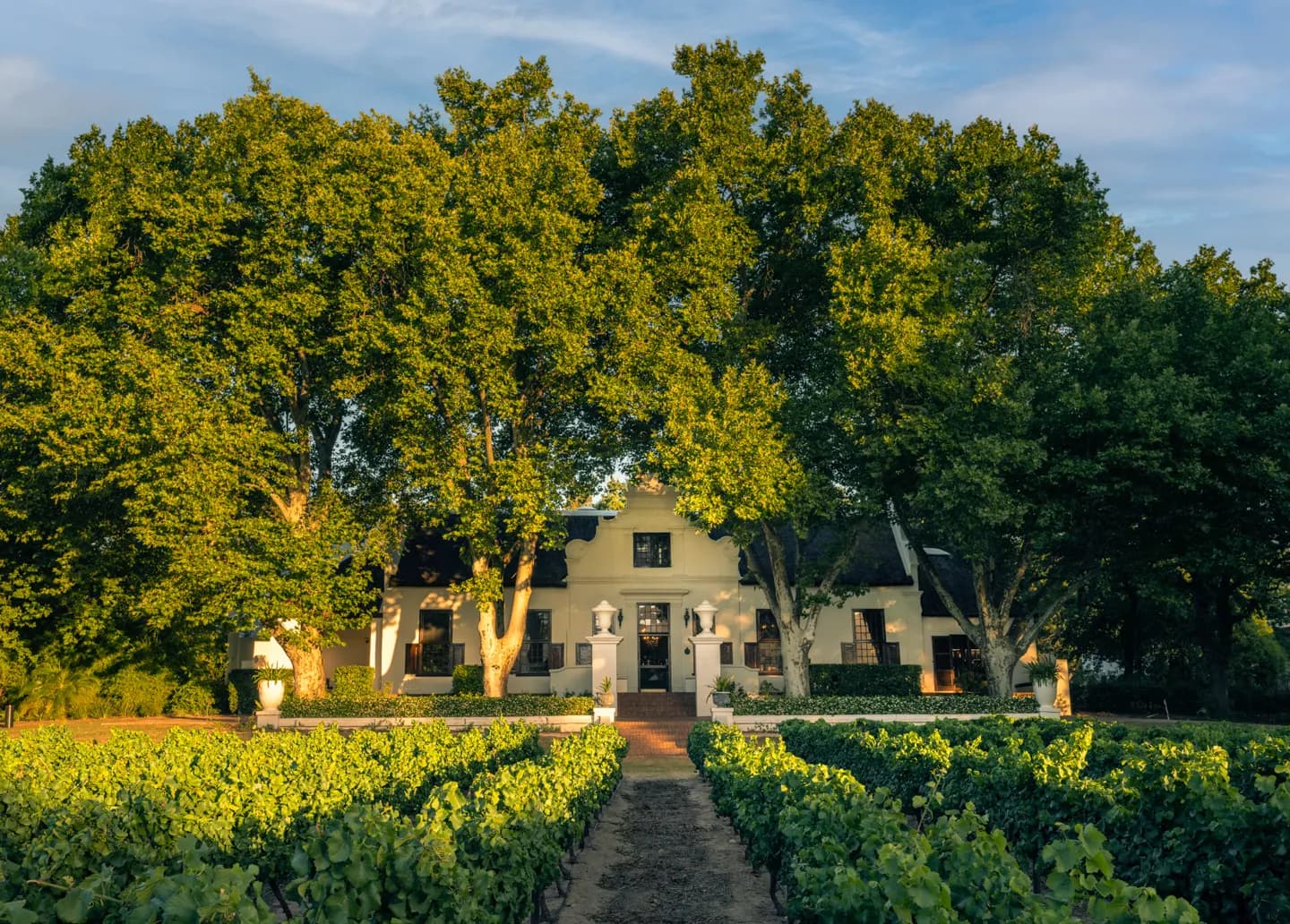
Paarl and Durbanville
Paarl, home to KWV and Nederburg, is one of the Cape's oldest wine towns, and a standard tasting there costs about R95 (Paarl's prices). Durbanville, on the hills north of Cape Town, is known for Sauvignon Blanc.
Estates to know: Diemersdal, Platter's Top Performing Winery of the Year in the 2026 guide, whose The Journal Pinotage 2022 was Pinotage Wine of the Year in the 2025 guide; Fairview; Nederburg.
Explore Paarl and DurbanvilleHow to taste
Look
Hold the glass by the stem, so your hand doesn't warm the wine. Tilt it against a white background to see the colour and how clear and deep it is.
Smell
Swirl gently, then take a few short sniffs. What fruit is there: citrus, stone fruit, berries? Anything earthy, herbal or spicy? Most of what we call taste is smell, so take your time here.
Taste
Take a small sip and move it around your mouth. Notice how sweet or dry it is, how fresh (the acidity), how the tannins feel in a red, and how long the flavour lasts.
Talk
Ask questions: why one wine tastes of melon, how a vintage differs from the last, what the vineyard is like. The people pouring know the wines and the farm.
Pace yourself
Spittoons are there to be used, and nobody minds if you do, especially if you're visiting several estates. Drink water between wines.
The grapes you'll taste
Pinotage
South Africa's own
A cross of Pinot Noir and Cinsaut, bred by Abraham Perold at Stellenbosch University in 1925; the first Pinotage wine was made in 1941. Expect dark fruit, earthiness and spice. To taste: Kanonkop and Diemersdal.
Chenin Blanc
The most planted
The Cape's most planted white grape, made in every style from fresh and fruity to rich and oak-aged. Tim Atkin's 2025 South Africa report found 34 Chenin Blancs scoring 95 points or more, and argued that the Cape has overtaken the Loire as the source of the world's top dry Chenins. To taste: Ken Forrester and Mullineux.
Cabernet Sauvignon
The classic
Structured, with dark fruit and firm tannins, and the backbone of the Cape's Bordeaux-style blends. To taste: Simonsig, Meerlust for its Rubicon blend, and Delaire Graff.
Sauvignon Blanc
The refresher
Crisp and herbal, at its freshest from the cool vineyards of Constantia, Durbanville, Elgin and the coast. To taste: Klein Constantia, Vergelegen and Springfontein.
Cap Classique
The Cape's sparkling wine
Sparkling wine made by the traditional method, with its second fermentation in the bottle, as in Champagne. Simonsig's Kaapse Vonkel, released in 1971, was the first. To taste: Graham Beck, Simonsig and Villiera.
When to go
Averages for Stellenbosch, from climate-data.org. The seasonal guide to the Cape Winelands goes month by month.
Spring
September–October
Highs 18-21°C
Mild days, green vineyards with new growth, and fewer visitors than in summer. Rain eases off through October.
Summer
November–February
Highs 23-28°C
Warm and dry, and the busiest time of year: book tastings and lunch at weekends. Harvest starts in late January.
Autumn
March–May
Highs 26°C falling to 19°C
Harvest ends in March or April, the vineyards turn gold and red, and the crowds thin out.
Winter
June–August
Highs about 16°C, nights 6-7°C
The wettest months, with the quietest tasting rooms. Some tasting rooms have a fireplace. Bring a jacket.
What it costs, and getting there
| What | Typical price |
|---|---|
| A standard tasting | About R100 across the Cape; about R50 around Robertson, R95 in Paarl, R120 in Stellenbosch and Walker Bay, R145 in Franschhoek and R150 in Constantia |
| A food and wine pairing | About R160 |
| The Franschhoek Wine Tram | R350 per adult, R90 for children aged 3 to 17, tastings extra (rates rise on 1 November 2026) |
Three or four tastings make a full day, so allow about R300 to R450 per person for tastings, before lunch. Many estates waive the fee when you buy wine, often six bottles or a case. The tasting price index has every region's figures.
Getting there: Constantia is 20 minutes from Cape Town, Stellenbosch about 40, and Franschhoek about an hour. Whoever drives shouldn't taste: South Africa's limit is 0.05 grams of alcohol per 100 ml of blood. The Wine Tram, Stellenbosch's Vine Hopper, a guided tour or a driver for the day all let everyone taste; wine tasting without a car and the day trip from Cape Town cover the options.
Tips for the day
-
Check how each estate takes visitors: walk-in, booking, or by appointment only. Book at weekends in summer.
-
Plan three or four estates close together. A tasting takes about an hour, lunch two.
-
Check the day. Several estates close on Sundays or Mondays; each estate's page has its hours.
-
Taste lighter wines first: whites and sparkling before reds, younger before older.
-
Ask about vineyard walks and cellar tours. Some estates offer them; each estate's page lists what it offers.
-
Look beyond Stellenbosch and Franschhoek. Robertson, the Hemel-en-Aarde and the Swartland are quieter, and Robertson's tastings cost about half as much.
-
Buy what you like. It often pays for the tasting.
Wine with South African food
Estate restaurants often suggest pairings like these:
Pinotage
Game, braised meats or bobotie
Sauvignon Blanc
Fresh seafood, ceviche or salads
Chenin Blanc
Rich cheeses, Cape Malay curries or grilled fish
Cabernet Sauvignon
Beef, roast lamb or mature cheddar
Keep reading
- New to South African wine? The beginner's guide to South African wine goes deeper into Pinotage, Chenin Blanc and the other grapes.
- Planning a day from Cape Town? The Cape Winelands day trip guide has five sample days with drive times and tasting prices.
- Choosing when to go? The seasonal guide to the Cape Winelands goes month by month.